


We provide damp and mould solutions across Surrey, helping homeowners deal with condensation and recurring moisture issues.
We regularly work in:
Esher / Weybridge / Leatherhead / Walton-on-Thames

"How can I stop getting black mould on my walls and ceilings?"
This is a common question I get asked, the simple answer being excess moisture & poor ventilation. Particularly in older homes, where an uninsulated solid 9-inch wall is all that separates your room from the outside, these walls will be cold and the warm air within the room will find these cold walls and moisture will condense on them. Soon this will turn to black spot mould.
Damp and mould issues are often caused by cold surfaces and poor insulation.
Mould & Damp Prevention
Many people are surprised to find out that around 95% of black spot mould is caused by moisture inside the home that condenses on certain surfaces. Some materials are more likely to encourage mould growth than others.
While proper airflow is important in helping to reduce condensation and mould on walls and ceilings, it’s not always enough to fully prevent it. That’s why insulating your walls and ceilings—by increasing their thermal resistance—is a more reliable and lasting way to tackle black spot mould and damp issues, especially in Surrey.
Long-term exposure to black spot mould can be harmful and lead to serious health issues. If you notice this mould in your home, it’s important to remove it right away and take steps to prevent it from returning.

Are your solid walls cold and attract condensation?

Why Mould Keeps Coming Back — And How to Stop It for Good
Wiping away mould with household cleaners or bleach might seem like a quick solution, but unfortunately, it’s only temporary. In fact, some cleaning products can actually make the problem worse by encouraging mould to return even faster.
At Skim 2 Fin, we believe it’s essential to treat the cause of mould, not just the visible signs. One key step is removing the paint layer along with the mould, as certain paints can trap moisture and contribute to the issue. And because black mould is toxic, proper safety measures, like wearing a protective mask, are always advised.
Are your bay windows cold? Do they attract damp

Understanding Your Walls Is the First Step
Mould often forms where condensation builds up, and this usually happens on cold surfaces that lack insulation. That’s why it’s important to know what your walls and ceilings are made of.
External-facing solid walls with no cavity are a common trouble spot. These walls get extremely cold in the winter, creating the perfect conditions for condensation and black spot mould.
Improving Airflow Helps — But It’s Not Enough
While we can install features like trickle vents and wall vents to boost airflow and reduce moisture build-up, ventilation alone won’t warm up cold walls. And let’s face it, leaving vents open in the middle of winter isn’t always practical or energy-efficient.
A Long-Term Solution
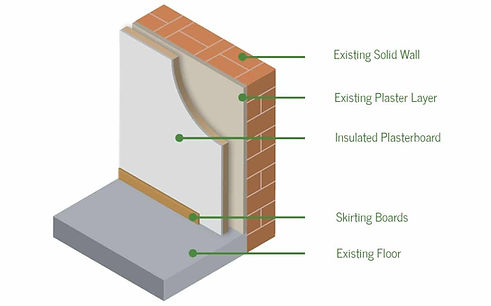
The most effective way to combat black spot mould is to raise the internal surface temperature of your walls and ceilings. That’s where internal wall insulation comes in. By insulating your walls, you reduce the chances of condensation forming in the first place — stopping mould before it starts.
If you’re struggling with persistent mould problems, get in touch with Skim 2 Fin today. We cover Surrey and surrounding areas, offering professional insulation, plastering, and decorating services tailored to your home.
Need expert advise on how to deal with condensation, damp & mould

"What can I do to reduce the humidity in my home?"
-
Turn on extractor fans, specifically in the bathroom and kitchen.
-
Dry clothes outside, moisture from damp clothes has to go somewhere as they dry.
-
Maintain constant temperature in your home. Heating your home evenly, keeping windows closed in unheated rooms for example.
-
Using a dehumidifier can actively remove the excess moisture.
We provide damp and insulation solutions across Surrey.
Learn more about internal wall insulation across Surrey HERE.

"How can I improve ventilation to stop mould growth?"
-
Regularly open windows, especially in rooms with high humidity.
-
Cross ventilate if possible, opening windows in opposing rooms can expel moist air.
-
Ensure furniture is not pushed against external cold walls, allowing the air to circulate.
-
Make sure vents are not blocked and consider installing additional ventilation options.